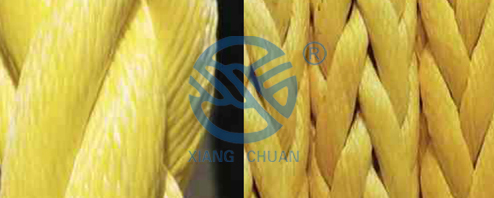
En el mundo de la elevación y el aparejo, donde la seguridad y la confiabilidad son primordiales, la eslinga sin fin (un bucle continuo y sin costuras de material de alto rendimiento) se ha convertido en una herramienta indispensable. Su versatilidad, resistencia y manejo suave de cargas lo convierten en la opción preferida en industrias que van desde la construcción y la fabricación hasta la energía marina y el entretenimiento. Sin embargo, el rendimiento de una eslinga sin fin no se define únicamente por su diseño; viene dictado fundamentalmente por los materiales con los que está construido. La elección del material afecta todo, desde el límite de carga de trabajo (WLL) y la resistencia a la abrasión hasta la estabilidad química y la idoneidad en ambientes extremos.
Este artículo proporciona una inmersión profunda en los materiales primarios utilizados en la construcción de eslingas sin fin, explorando su estructura molecular, procesos de fabricación y las ventajas y limitaciones únicas que cada uno aporta a la tarea crítica de la gestión segura de la carga.
Los materiales principales: un espectro de fibras sintéticas
La gran mayoría de las eslingas sin fin modernas se fabrican con fibras sintéticas de alto rendimiento. Estos no son textiles simples y cotidianos; Son materiales de ingeniería diseñados para exhibir una durabilidad y una relación resistencia-peso excepcionales. Los tres jugadores dominantes en este campo son el poliéster, el nailon y las fibras HM-HT (alto módulo - alta tenacidad) de alto rendimiento como Dyneema® y Spectra®.
1. Poliéster (PES/PET): el caballo de batalla polivalente
El poliéster, específicamente el tereftalato de polietileno (PET), es uno de los materiales más comunes y versátiles para la construcción de eslingas sin fin.
Estructura y características químicas: Las fibras de poliéster se forman a partir de polímeros de cadena larga donde al menos el 85% del enlace éster está presente. Esta estructura le otorga varias propiedades clave:
Alta resistencia: si bien no es tan fuerte como las fibras HM-HT, el poliéster cuenta con una sólida relación resistencia-peso, adecuada para una amplia gama de aplicaciones de elevación.
Bajo alargamiento: una característica crítica. El poliéster presenta una elasticidad relativamente baja (normalmente entre un 2 % y un 3 % en la carga límite de trabajo), lo que proporciona una excelente estabilidad y control durante el levantamiento. La carga no "rebotará" ni se asentará significativamente una vez tensada.
Excelente resistencia a los rayos UV y a la abrasión: el poliéster tiene una resistencia superior a la degradación causada por la luz solar en comparación con el nailon y es altamente resistente al desgaste de superficies rugosas.
Buena resistencia química: Funciona bien contra la mayoría de los ácidos diluidos, agentes oxidantes y disolventes orgánicos. Sin embargo, es susceptible a los álcalis fuertes (sustancias cáusticas), que pueden hidrolizar las cadenas poliméricas y debilitar gravemente la eslinga.
Aplicaciones típicas: Las eslingas sin fin de poliéster son la opción ideal para levantamientos de uso general. Su estabilidad los hace ideales para levantamientos de precisión, superficies delicadas (ya que es menos probable que estropeen los acabados que el nailon) y aplicaciones en exteriores donde la exposición a los rayos UV es una preocupación. Se utilizan ampliamente en la fabricación, el movimiento de maquinaria y la construcción.
2. Nailon: la potencia absorbente de energía
El nailon, concretamente el nailon 6 o nailon 6,6, fue una de las primeras fibras sintéticas utilizadas para las eslingas de elevación y sigue siendo popular debido a su excepcional dureza y elasticidad.
Estructura y características químicas: El nailon es una poliamida, caracterizada por la presencia de grupos amida (-CO-NH-) a lo largo de su cadena molecular. Esta estructura imparte distintas cualidades:
Alto alargamiento: el rasgo más característico del nailon es su capacidad de estirarse (normalmente entre un 6 % y un 8 % en WLL). Esta elasticidad le permite absorber cargas de impacto y energía, lo que lo hace más seguro para situaciones de elevación dinámicas en las que una carga podría desplazarse o sacudirse.
Dureza y resistencia a la abrasión superiores: el nailon es increíblemente resistente y resistente y, a menudo, supera al poliéster en resistencia pura a la abrasión contra superficies rugosas.
Resistencia: Generalmente es más fuerte que el poliéster en términos de peso por peso.
Inconvenientes del material: El nailon absorbe agua, lo que puede reducir su resistencia hasta entre un 10 y un 15 % cuando está mojado. También es susceptible a la degradación por ácidos fuertes y ciertos agentes oxidantes. Su elasticidad, si bien es beneficiosa para la absorción de impactos, puede ser una desventaja cuando se requiere un control preciso de la carga.
Aplicaciones típicas: Las eslingas sin fin de nailon destacan en aplicaciones que implican cargas pesadas y abrasivas y posibles cargas de impacto. Se utilizan comúnmente en minas, canteras, fabricación de acero y manipulación de madera. Su elasticidad los hace menos adecuados para levantar objetos rígidos y quebradizos o para tareas de posicionamiento preciso.
3. Fibras HM-HT de alto rendimiento: la vanguardia
Esta categoría incluye fibras de polietileno de peso molecular ultraalto (UHMWPE), como Dyneema® y Spectra®, y fibras de aramida como Technora® y Kevlar®. Estas fibras representan el pináculo de la tecnología de eslingas sintéticas.
A. UHMWPE (Dyneema®/Spectra®)
Estructura y características químicas: Las fibras de UHMWPE se caracterizan por cadenas moleculares de longitud y alineación extremadamente altas. Este proceso "gel-spun" crea un material con un rendimiento incomparable en varias áreas:
Excepcional relación resistencia-peso: Dyneema® es, libra por libra, 15 veces más fuerte que el acero y significativamente más fuerte que el poliéster o el nailon. Esto permite crear eslingas con WLL muy altas que son increíblemente livianas y fáciles de manejar.
Bajo alargamiento: similar al poliéster, ofrece un bajo estiramiento para un excelente control de la carga.
Flotación: Es el único material de eslinga de elevación que flota, una característica de seguridad crítica para operaciones marinas y costa afuera.
Excelente resistencia química y a la abrasión: Es altamente resistente al agua, a la mayoría de los productos químicos y a la radiación UV. Sin embargo, tiene un punto de fusión más bajo (alrededor de 144°C - 152°C) en comparación con otras fibras, lo que requiere especial atención a la exposición al calor.
Aplicaciones típicas: Las eslingas sin fin de UHMWPE se utilizan donde se requiere máxima resistencia con el mínimo peso. Son ideales para ascensores marinos, aplicaciones aeroespaciales y cualquier escenario donde la ergonomía y la fatiga de los trabajadores sean preocupantes. Su resistencia química los hace adecuados para la industria de procesamiento químico.
B. Aramida (Technora®, Kevlar®)
Estructura y características químicas: Las fibras de aramida son poliamidas aromáticas que forman cadenas moleculares rígidas en forma de varillas que dan como resultado propiedades térmicas y mecánicas excepcionales.
Resistencia a altas temperaturas: las fibras de aramida pueden funcionar continuamente a temperaturas de hasta 180 °C-200 °C y tienen puntos de fusión muy altos (~500 °C), lo que las hace ideales para entornos con altas temperaturas como fundiciones o cerca de operaciones de soldadura.
Alta resistencia y bajo alargamiento: Poseen una relación resistencia-peso similar al UHMWPE con un estiramiento mínimo.
Inconvenientes del material: Las fibras de aramida son susceptibles a la degradación por rayos UV y son sensibles a la abrasión cuando están bajo tensión (deben protegerse con una cubierta o funda). También suelen ser más caras que otras opciones.
Aplicaciones típicas: Las eslingas sin fin de aramida son productos especializados diseñados para aplicaciones de alto calor, como levantar metales calientes, en la fabricación de vidrio y en situaciones donde es probable la exposición a chispas de soldadura.
El proceso de construcción: entrelazando la fuerza en un bucle
La fibra cruda es sólo el comienzo. La forma en que se procesa y construye define la integridad del producto final.
Hilado de hilo: el polímero sintético se funde y se extruye a través de una hilera para formar filamentos continuos. Estos filamentos luego se hilaron para formar un hilo. El denier (grosor) y el número de filamentos por hilo se controlan cuidadosamente para lograr la resistencia y flexibilidad deseadas.
Tejido y revestimiento: Los hilos se tejen en telares especializados hasta formar una tela ancha y plana conocida como cinta. El patrón de tejido (p. ej., liso, tipo cesta) es fundamental para distribuir la carga uniformemente a lo ancho de la eslinga y proporcionar una superficie lisa y resistente a enganchones. Para algunos materiales, especialmente la aramida, los hilos centrales que soportan la carga suelen estar encerrados en una funda protectora de un material más resistente a la abrasión, como el poliéster.
La unión "interminable": el proceso de empalme Esta es la parte más crítica y especializada del proceso de fabricación. A diferencia de un cabestrillo con terminaciones cosidas, un cabestrillo sin fin no tiene uniones mecánicas. Se crea mediante empalme.
Los dos extremos de la cinta se estrechan cuidadosamente y se entrelazan nuevamente en el cuerpo del cabestrillo en una sección larga y gradual (el empalme).
Esto crea una unión que distribuye la carga mediante la fricción y la integración del tejido en lugar de depender del hilo.
Un empalme ejecutado correctamente puede alcanzar el 100 % de la resistencia nominal de la cinta, convirtiéndola en la parte más resistente de la eslinga. Esta construcción sin costuras también hace que sea más suave con las superficies de carga, ya que no hay ojos duros ni costuras que puedan causar daños.

 English
 Portugues
 Pусский
 Français
 Deutsch
 日本語
日本語
 한국어
한국어
 العربية
 Italian
 Nederlands
 Ελληνικά
 Svenska
 Polski
 ไทย
ไทย
 Turkish
 हिन्दी
 Indonesia
 Melayu
 Tiếng Việt
 dansk
dansk
 Magyar
 বাংলা
বাংলা
 čeština
 Soomaali
 မြန်မာ
 فارسی
فارسی
 українська
 norsk
norsk
 Gaeilge
 беларускі
 Română
 ພາສາລາວ
 Filipino
 lietuvių
 Cymraeg
 Suomalainen
 o'zbek
 اردو
اردو
 հայերեն
 سنڌي
سنڌي
 Hrvatski
 íslenskur
 galego
 català
 Zulu South Africa
 ಕನ್ನಡ
ಕನ್ನಡ
 Indonésia Sunda
 Кыргызча
 тоҷикӣ
 Србија
 Hawaii
 नेपाल
नेपाल
 euskara
 latvija
 پښتو
پښتو
 საქართველოს
 bosna
bosna
 Eesti
Eesti
 Azerbaijani
 Shqipëria
 Malta
Malta
 Kikongo
 Eʋegbe
 Fiji
Fiji
 Tonga
Tonga
 中文站
中文站

 +86-514-88253368



 Teléfono
Comentario
(0)